
Our Story
ARDINGTON HISTORY
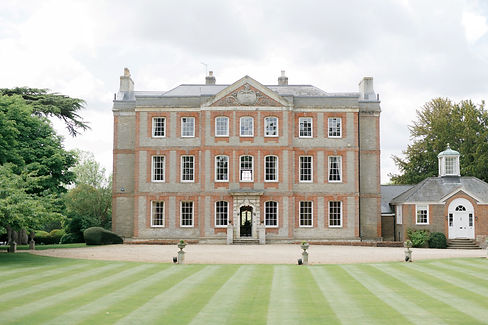
Ardington House was built between 1719 and 1721 and is one of the finest Georgian houses in Oxfordshire. It stands in gardens and parkland with its own island and a stretch of river, and it has been home to the Baring family since 1939.
1719 - 1721
The House was commissioned by Edward Clarke, who wanted a Baroque house of perfect symmetry, full of light.
The architect
It was designed by the master mason Thomas Strong the younger, whose family had worked with Sir Christopher Wren on St Paul's Cathedral and with Sir John Vanbrugh at Blenheim Palace. The staircase in the Imperial Hall is the House's most celebrated feature. It rises as twin flights that merge into a single suspended flight, after Vanbrugh's staircase at King's Weston.


1833: Robert Vernon
Robert Vernon bought the House in 1833. He had made his fortune supplying horses to the British Army during the Napoleonic Wars and is remembered today for his collection of paintings, now in the Tate and the National Gallery. He added the Vernon family crest to the pediment.
1861: Lord Wantage
Lord Wantage bought the House in 1861. He was among the first recipients of the Victoria Cross, for bravery in the Crimean War, and a founder of the British Red Cross. Two Russian cannonballs from the Battle of Inkerman in 1854 still stand beside the front door.


The Baring Family
The Barings, the banking family who founded Barings Bank in 1762 and served in politics and public life for three centuries, have lived at Ardington since 1939. Their portraits hang throughout the House, and in the oak panelled Dining Room in particular.